What Are Ketones? A Plain-English Guide (2026)
Ketones explained simply: what they are, the 3 types, how ketosis works, and how to measure ketones with blood, breath, and urine tests.

Editorial Team · September 12, 2025 · 5 min read
Last updated June 12, 2026
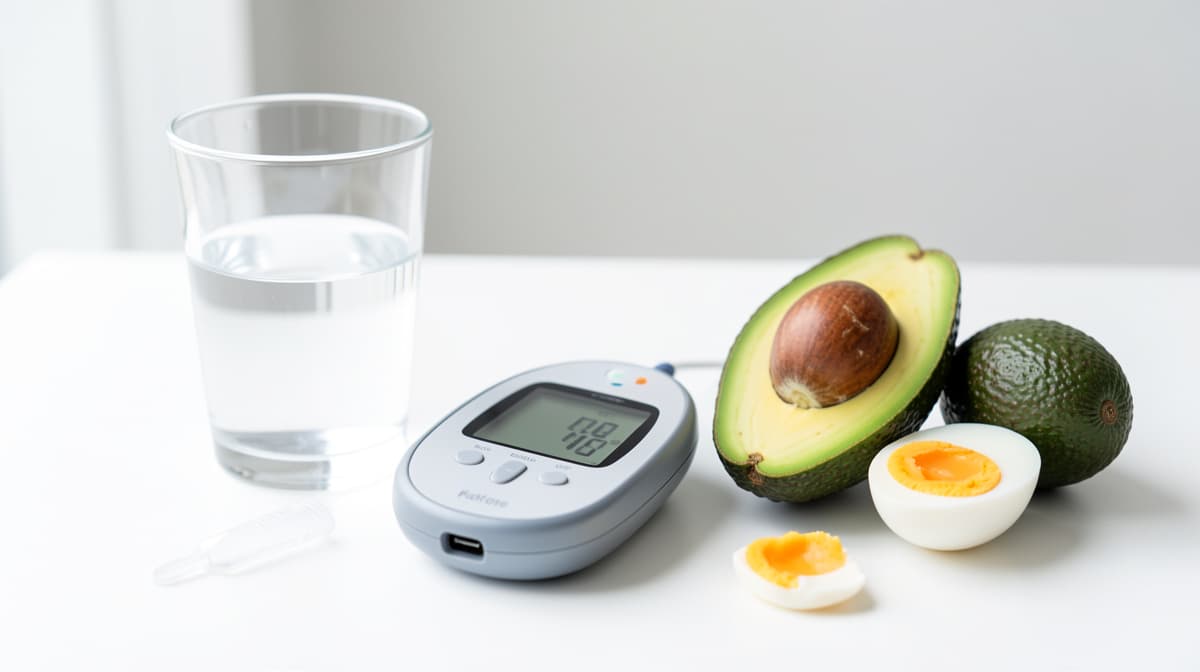
Ketones are molecules your liver makes from fat when carbohydrates are scarce, and your brain and body burn them for fuel. There are three: acetoacetate, beta-hydroxybutyrate, and acetone. On a low-carb or ketogenic diet, your body shifts from running mainly on glucose to running on ketones, a metabolic state called ketosis.
What are ketones?
Most of the time, your body runs on glucose (blood sugar) from the carbohydrates you eat. When carbs run low, such as during fasting or a ketogenic diet, your blood sugar and insulin drop. That signals your liver to start breaking down fat into ketones, an alternative fuel.
This matters because your brain can't burn fat directly, but it can burn ketones. In fact, after a few days of carb restriction, ketones can supply a large share of your brain's energy. Ketones are not a sign that something is going wrong, they're your body's normal backup fuel system, refined over millions of years of feast and famine.
The 3 types of ketones
"Ketones" is an umbrella term for three related molecules, often called ketone bodies:
- Beta-hydroxybutyrate (BHB) — Technically not a ketone in the strict chemical sense, but the main energy-carrying molecule that circulates in your blood. This is what blood meters measure.
- Acetoacetate (AcAc) — The first ketone your liver produces. Some is converted into BHB, and some breaks down into acetone. This is what urine strips detect.
- Acetone — A byproduct of acetoacetate that's exhaled through your lungs. It's responsible for the faintly fruity "keto breath" and is what breath analyzers measure.
Together these three make up the fuel supply that defines ketosis.
What is ketosis?
Ketosis is the metabolic state where your body is producing and burning ketones at a meaningful rate, rather than relying mainly on glucose. The shift happens because eating very few carbs keeps insulin low, and low insulin is the green light for fat-burning and ketone production.
Nutritional ketosis is usually defined as blood ketones between 0.5 and 3.0 mmol/L. To reach it, most people restrict carbohydrates to under 50g per day, with stricter plans aiming for 20–30g (National Library of Medicine). Getting there typically takes a few days of consistent low-carb eating.
How to get into ketosis
There's no trick beyond consistency, but a few levers move you there faster:
- Keep carbs genuinely low. This is the big one. Most people aim for under 20–50g of net carbs per day. Hidden carbs in sauces, drinks, and "healthy" snacks are the usual reason people stall.
- Eat enough fat and adequate protein. Fat becomes your main fuel; protein protects muscle. Build meals around the keto food list.
- Give it time. It generally takes 2–4 days of steady carb restriction before ketones rise meaningfully.
- Stay hydrated and replace electrolytes. This eases the temporary "keto flu" some people feel in the first week.
The single hardest part is staying under your carb limit every day, because carbs hide everywhere. This is where tracking helps: CarbMeNot lets you log meals and see your net carbs in real time, so you know whether you're actually low enough to stay in ketosis instead of guessing. If you're new to it, our guide on how to track macros walks through the basics.
How to measure ketones
You can confirm ketosis three ways, each measuring a different ketone. None is "wrong," they just trade accuracy for cost and convenience.
| Method | Measures | Accuracy | Cost |
|---|---|---|---|
| Blood meter | Beta-hydroxybutyrate (BHB) | Highest | Higher (meter + strips per test) |
| Breath analyzer | Acetone | Moderate | One-time device, no consumables |
| Urine strips | Acetoacetate | Lowest (fades over time) | Cheapest |
A few practical notes: blood meters are the gold standard and the only method that gives a precise mmol/L number. Breath analyzers are reusable and convenient for daily checks. Urine strips are great for beginners confirming they've reached ketosis, but they become unreliable after a few weeks, because as your body adapts it spills fewer ketones into urine.
You don't strictly need to measure at all. Many people simply keep carbs low and watch for signs like reduced appetite and steadier energy. Testing is mostly useful for dialing in your personal carb threshold.
Nutritional ketosis vs ketoacidosis
This distinction matters, so let's be clear. Nutritional ketosis (from diet or fasting) is a controlled state where ketones stay in roughly the 0.5–3.0 mmol/L range. Your body self-regulates: insulin, even at low levels, keeps ketone production in check. For most healthy people, it's safe and well tolerated.
Diabetic ketoacidosis (DKA) is a completely different, dangerous condition. It occurs mainly in people with type 1 diabetes (and rarely type 2) when there's almost no insulin at all. Without insulin to apply the brakes, ketones and blood sugar climb to extreme levels (often above 7–10 mmol/L), turning the blood dangerously acidic. DKA is a medical emergency.
The takeaway: the mild ketosis from a low-carb diet is not the same as ketoacidosis, and a working insulin system keeps them far apart. If you have diabetes or take blood-sugar or blood-pressure medication, talk to your doctor before starting a ketogenic diet.
The first step into ketosis: track your carbs
Everything about ketosis comes back to one number: how many carbs you're eating. Stay under your limit and ketones rise on their own; drift over it and they don't. CarbMeNot makes that number visible. Scan or search a food, and the app shows your net carbs instantly and tracks how much room you have left for the day, so getting into ketosis becomes a measurable goal instead of a guessing game. It's the simplest way to make sure your low-carb effort is actually low-carb enough to work.
Key takeaways
- Ketones are fat-derived fuel your liver makes when carbs are low; the brain and body burn them in place of glucose.
- The three ketone bodies are acetoacetate, beta-hydroxybutyrate (BHB), and acetone.
- Ketosis is usually 0.5–3.0 mmol/L of blood ketones, reached by keeping carbs under ~20–50g per day.
- Measure with a blood meter (most accurate), breath analyzer, or urine strips (cheapest).
- Nutritional ketosis is safe for most people; diabetic ketoacidosis is a separate medical emergency.
- Staying in ketosis comes down to tracking carbs consistently, which is exactly what CarbMeNot is built for.
Frequently asked questions
- What are ketones?
- Ketones are molecules your liver makes from fat when carbohydrates are scarce. The three types are acetoacetate, beta-hydroxybutyrate, and acetone. Your brain, heart, and muscles can burn ketones for energy in place of glucose, which is what happens on a ketogenic diet.
- What is a normal ketone level?
- On a standard diet, blood ketones sit below 0.5 mmol/L. Nutritional ketosis typically runs between 0.5 and 3.0 mmol/L. Levels above roughly 3.0 mmol/L are higher than most people need, and readings above 7–10 mmol/L can signal dangerous ketoacidosis, especially in people with type 1 diabetes.
- How do you know if you're in ketosis?
- The most reliable way is a blood ketone meter reading of 0.5 mmol/L or higher. Common signs include reduced appetite, more steady energy, and a slightly fruity breath. Breath and urine tests offer cheaper, less precise confirmation.
- Are ketones bad for you?
- For most healthy people, the nutritional ketosis produced by a low-carb diet is safe and well tolerated. Ketones only become dangerous in diabetic ketoacidosis, a medical emergency where ketone and blood-sugar levels climb far higher than diet alone can cause.
Sources
Keep reading
Free tools: Is It Keto? checker · macro calculator · protein calculator · 7-day meal plan PDF